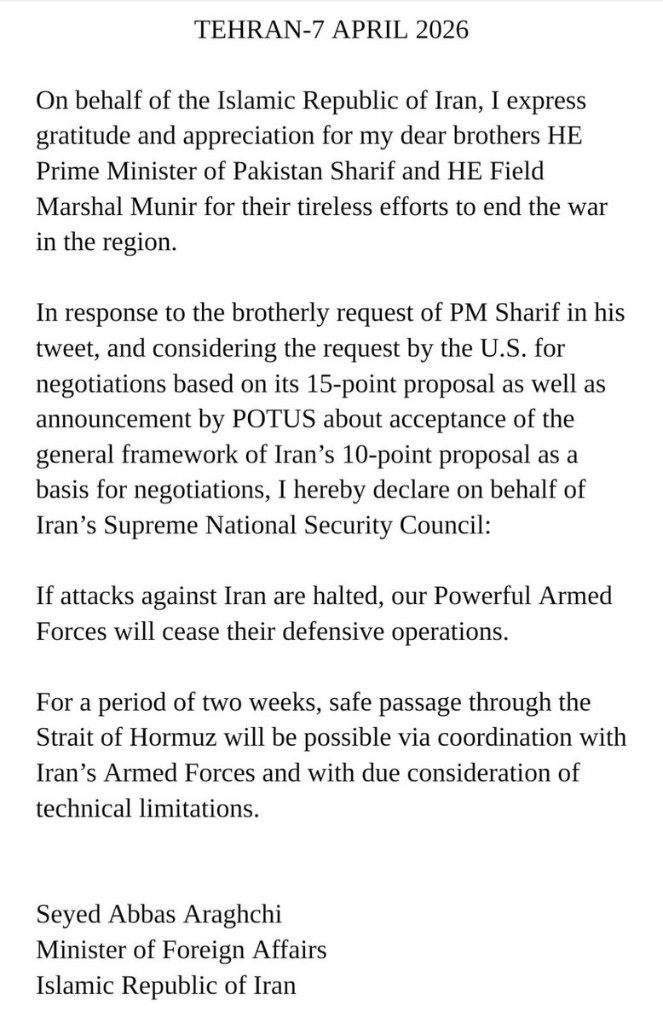
On April 7, 2026, a sudden breakthrough offered the Middle East a reprieve. In a pair of announcements, President Donald Trump and Iranian Foreign Minister Seyed Abbas Araghchi declared a two-week, double-sided ceasefire. Brokered through the mediation of Pakistani Prime Minister Shehbaz Sharif and Field Marshal Asim Munir, the agreement halts U.S. bombing in exchange for the “complete, immediate, and safe opening” of the Strait of Hormuz.
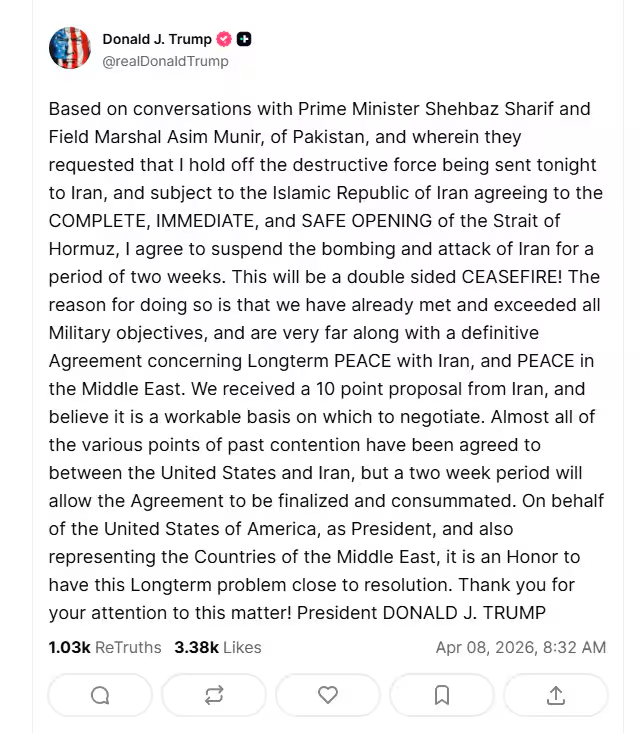
While Washington claims its military objectives have been “met and exceeded” and Tehran agrees to end defensive operations to negotiate based on competing 10- and 15-point proposals, the international community must remain clear-eyed. This 14-day pause is a desperately needed achievement for diplomacy, but we must remember: the post-World War II international order remains fragile.
To understand this moment, we must look at the campaign that brought us here. On February 28, 2026, the United States and Israel initiated “Operation Epic Fury”. This war of choice was executed without a United Nations mandate or evidence of an imminent Iranian threat. It began with the assassination of Ayatollah Ali Khamenei.
As I established in my first op-ed, launching an unprovoked attack across sovereign borders constitutes a crime of aggression. It violates the UN Charter’s fundamental prohibition on the illegal use of force, serving as the violent culmination of wartime footing that emerged from Israel invoking Article 40(a) in October 2023.
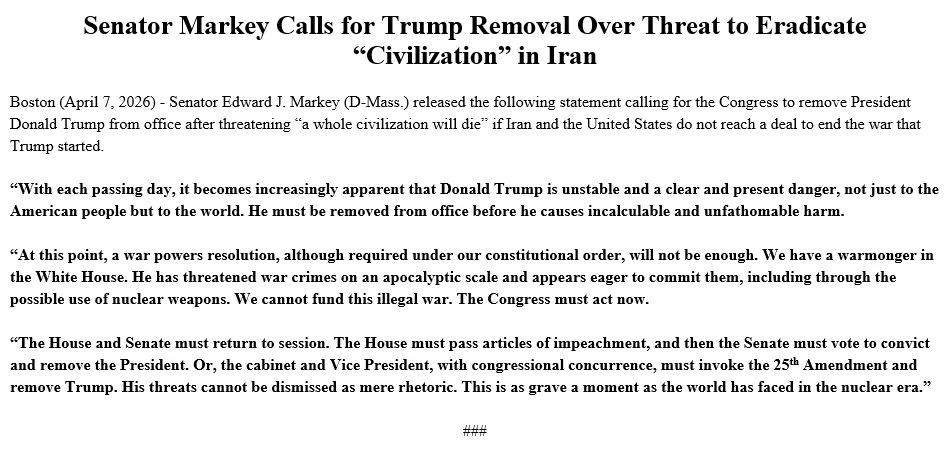
Throughout this campaign, the rhetoric and stated policies of United States leadership discarded rules of engagement. Defense Secretary Pete Hegseth declared a policy of “no quarter, no mercy”, a directive explicitly forbidden by customary international law and the U.S. War Crimes Act. Concurrently, President Trump threatened to bomb Iran “back to the Stone Age”. On March 30, he issued a severe ultimatum threatening to “obliterate” Iran’s desalination plants to force political concessions. Because these plants are indispensable to the survival of 85 million civilians facing drought, threatening their destruction constitutes the war crimes of collective punishment and starvation as a method of warfare under the Geneva Conventions.
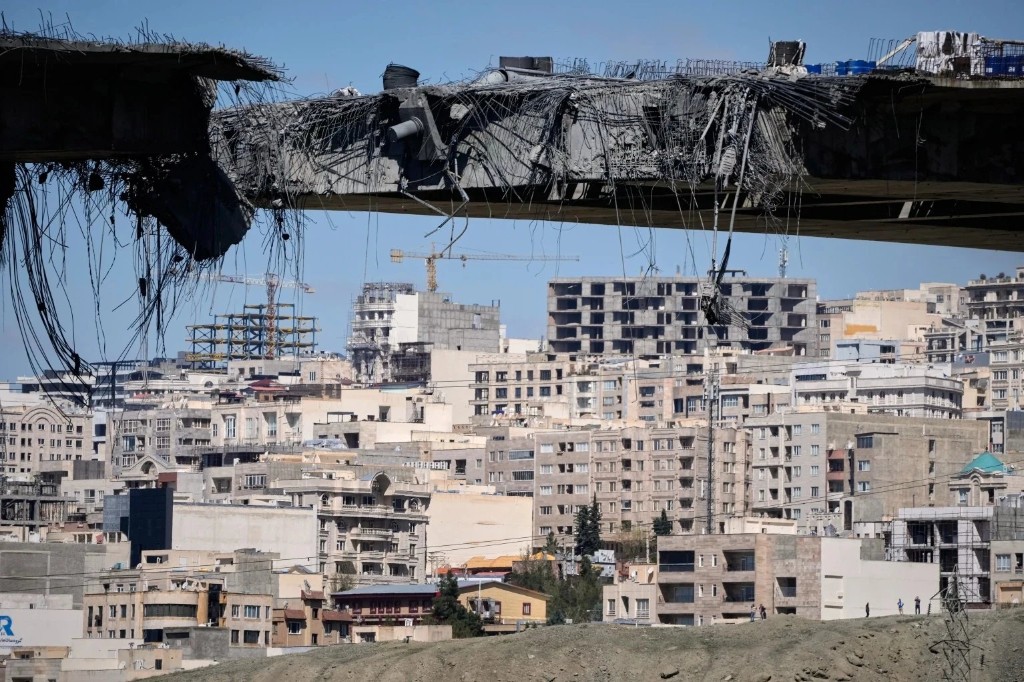
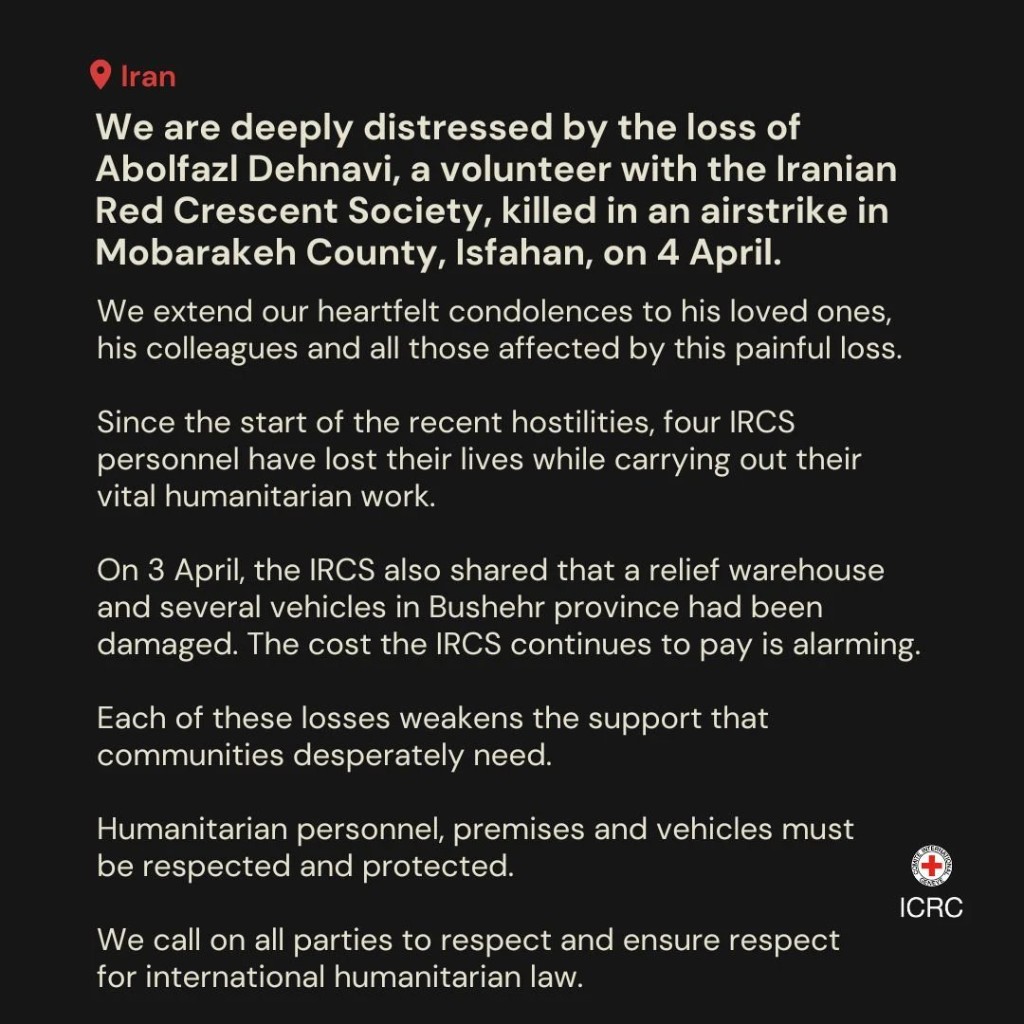
On the ground, the military campaign repeatedly failed to uphold the “principle of distinction”, the rule of war requiring militaries to separate combatants from non-combatants. This failure was evident in the devastating human toll, which included a February 28 missile strike on the Shajareh Tayyebeh school in Minab, killing at least 156 people, including more than 100 schoolchildren and 26 teachers. Beyond casualties, the campaign targeted civilian infrastructure. These attacks resulted in the severing of the Karaj bridge and strikes near the Bushehr Nuclear Power Plant, forcing Russia to evacuate nearly 200 Rosatom technicians due to the risk of a radioactive disaster. Furthermore, an April 4 airstrike in Isfahan killed an Iranian Red Crescent volunteer, the fourth IRCS responder killed since the war began.
The global fallout from these violations has been unparalleled. As I detailed in my second op-ed, the closure of the Strait of Hormuz stranded 20,000 civilian seafarers, triggered the worst global supply disruption since the 1970s, and sent oil prices soaring to $114 a barrel. Within Iran, as many as 3.2 million people have been forcibly displaced.

Internationally, this unprovoked aggression isolated Washington and Tel Aviv. Spain promptly closed its airspace to U.S. military flights, while NATO allies like Italy pursued independent policies to protect its own interests. Concurrently, China and Russia formally condemned the strikes. The normalization of decapitation strikes even prompted Global South nations, including Brazil and South Africa, to discuss new mutual defense pacts outside Washington’s security umbrella.
Despite the ferocity of the assault, the initial strikes did not fracture Iranian society. For the United States, the campaign, costing taxpayers an estimated $1 to $2 billion daily, failed to achieve a rapid victory and evolved into a major political liability, threatening the administration’s legislative majority ahead of the 2026 midterm elections.
The April 7 ceasefire proves that escalation has reached a dead end. But a two-week pause is not a peace treaty. We cannot bomb our way to stability. President Trump cannot rely on handshake agreements; peace with Iran requires a binding UN Security Council resolution that lifts sanctions and settles the nuclear question by pairing Iran’s pledge against weapons with its right to civilian enrichment. The global economy and millions of innocent lives cannot withstand a collapse back into Operation Epic Fury. The only way out is by upholding international law.
Kian Jamasbi holds a Juris Doctor from Fordham University School of Law, with a concentration in International, Comparative, and Foreign Law. He earned a Bachelor of Science in Economics from the University of Michigan, Ann Arbor. His professional website is kianjamasbi.com. He is the founder of Oxuz News, where this commentary is published.