One month ago, the United States and Iran signed a memorandum of understanding to end the war. In my last op-ed, I welcomed it, and I repeated the warning of the International Crisis Group’s Ali Vaez: an agreement like this would stop the bleeding, but it would not heal the wound. I did not expect the bleeding to restart quite so quickly.
On July 8, President Trump declared the memorandum “over.” Iran’s Foreign Ministry answered that the deal was void and that Iran was fighting an existential war. U.S. Central Command reimposed the naval blockade of Iranian ports on July 14, and the Treasury Department had already revoked the oil waivers granted under General License X a week earlier. The IRGC then declared the Strait of Hormuz closed yet again, and American aircraft shortly thereafter resumed aerial bombardment of Iranian territory, continuing for four consecutive nights.
Ghalibaf, among the officials leading Iran’s delegation, stated conditions for adherence: a memorandum has meaning only while its clauses are in effect, and Iran will adhere on a reciprocal basis. That is a statement about American performance, not a departure from the instrument. Both governments now speak of the agreement in the past tense. But the memorandum is not dead. It is being negotiated under fire, and the proof is in the text of the agreement itself, in the conduct of both militaries, and in the statements of the officials running the negotiation. Let me be clear: nothing here suggests coercion is producing Iranian concessions on the gating clauses. The record shows Iran performing reciprocally against clauses the United States performs, and suspending where the United States suspends. This is the opposite of a state responding to pressure.
The Memorandum the Public Has Never Read
We must begin with what this document actually is, because its provenance matters. The Islamabad Memorandum of Understanding (MoU) is the direct descendant of the April 7 ceasefire I analyzed in my third op-ed, the fourteen-day pause brokered by Pakistani Prime Minister Shehbaz Sharif and Field Marshal Asim Munir. It replaces that arrangement with something more ambitious. The MoU’s fourteen points were drafted in mid-June, and on the American side, the negotiation was led by Vice President Vance, Jared Kushner, and Steve Witkoff. The Iranian delegation was led by officials including Parliament Speaker Mohammad Bagher Ghalibaf and Foreign Minister Abbas Araghchi.
The mediation was also broader this time than Pakistan alone. Saudi Arabia, Turkey, Qatar, and Egypt were all involved. Qatar served as co-mediator, while Egypt and Turkey played supporting roles. Riyadh, sources in Cairo say, has been a silent partner, briefed and consulted throughout. The formal ceremony initially planned for June 19 in Switzerland was overtaken by events. The signing instead took place on June 17, in three places at once: U.S. President Trump in France during the G7, Iranian President Pezeshkian in Tehran, and Pakistani Prime Minister Sharif in Islamabad. The instrument was executed in both English and Persian.
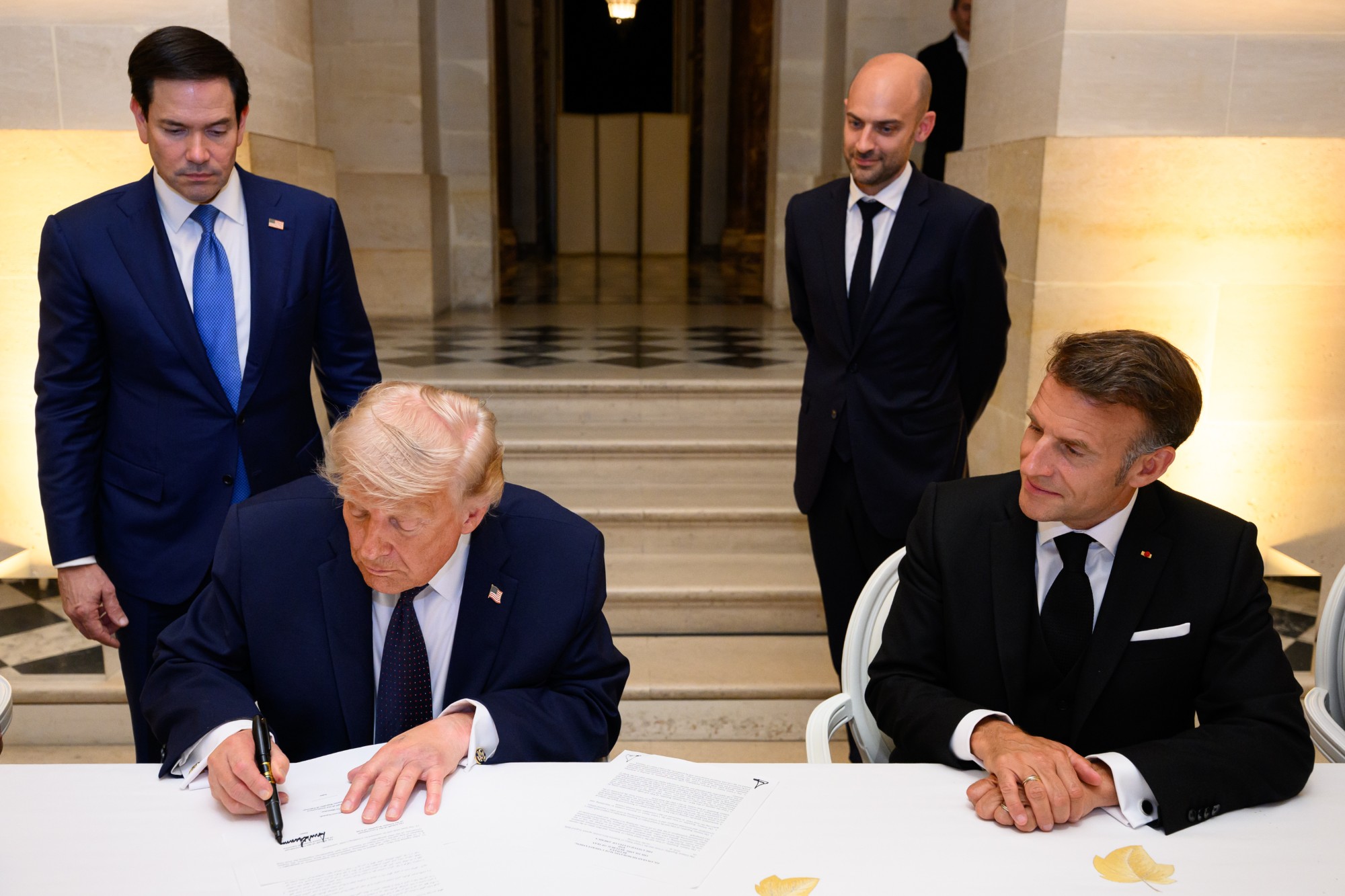
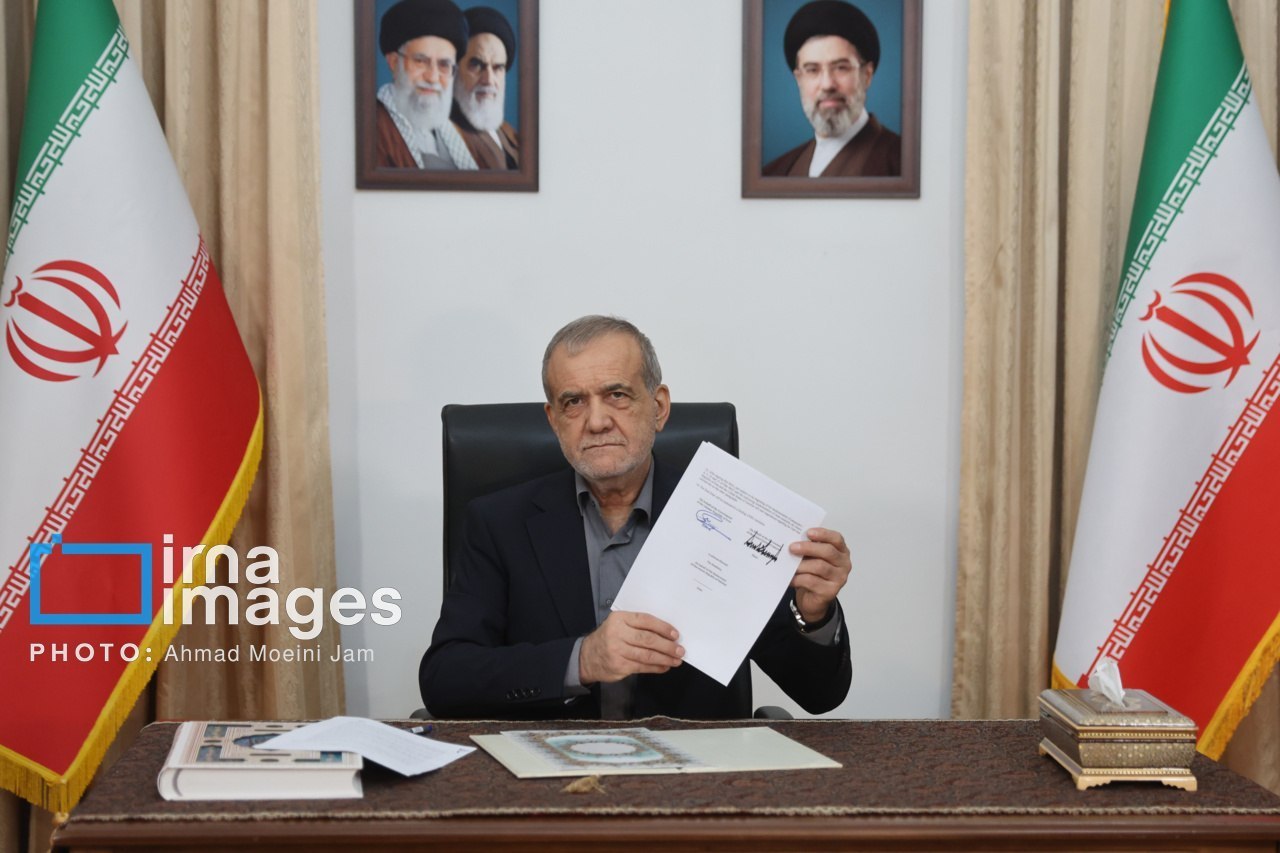
The United States has never officially published the text of the MoU. As Baker McKenzie’s sanctions practice and others have noted in tracking the agreement’s implementation, no formal government release exists. What the public has is the version read aloud to reporters by a senior administration official, and the version published by Iranian state media under President Pezeshkian. The agreement, for the American public, only exists in reported form.
What’s more, the U.S. President has qualified the nature of the MoU from day one. Before the signing, Trump told reporters at the G7: “It’s a memorandum of understanding. And if I don’t like it, we’ll go back to shooting at them, dropping bombs on their heads.” Whatever else that statement reveals, it establishes at least one thing: renewed bombing cannot, by itself, prove the memorandum is dead. The President’s comment suggests that, in his mind, bombing and implementing the MoU are compatible.
It’s also worth mentioning the legality of the MoU. An instrument styled as a memorandum of understanding is not presumptively binding. States reach for memorandums when they intend political commitment without legal obligation. Whether the Islamabad Memorandum binds is unclear, and the President’s own characterization at the G7 is evidence against an intent to be bound. My argument is therefore not that the memorandum is legally in force and binding. It is that the parties are still performing against its terms. I am making a claim about conduct, not about obligation. It is also why Paragraph 14, regarding a final deal to be enshrined with a UN Security Council resolution, matters so much. It is the instrument that would convert a political understanding into an obligation under international law.
Then there is the architecture of the text itself. Paragraph 13 conditions the final deal, including the $300 billion investment plan and the sanctions relief that would restore Iran’s economy, on the implementation, and the continuing implementation, of five other paragraphs. Paragraph 1 ends hostilities on all fronts and names Lebanon three times. Paragraph 4 contains two separate obligations: lifting the naval blockade, and removing American forces from the proximity of Iran within thirty days of the final deal. Paragraph 5 resolves the Strait of Hormuz with Oman and the Persian Gulf littoral states, including the removal of mines. Paragraph 10 provides for oil waivers. And Paragraph 11 addresses the unfreezing of Iranian assets.
Now, since July 8, where has the fighting been? The Strait. Lebanon. The blockade. The oil. Every instrument of violence over the past month has been aimed at one of the five gating clauses, and nothing beyond them is being contested. Nobody is fighting over the investment plan. Nobody is fighting over the final deal. The parties are still negotiating, under fire, the gating clauses that, if resolved, pave the way for everything else.
Have You Tried Turning It Off and Back On Again?
In the early days of the MoU, various dials proved the agreement could be adhered to, given sufficient will. The Treasury issued General License X on June 22, authorizing the production, delivery, and sale of Iranian-origin crude, implementing Paragraph 10. The blockade came off on June 18, by CENTCOM’s own account, partially satisfying Paragraph 4. Paragraph 11 also began to move. Ghalibaf announced an agreement, negotiated in Qatar and finalized in Switzerland, to release $12 billion in frozen assets in two tranches, beginning with $6 billion held in Doha. Lebanon quieted. Vance now points to the millions of barrels of oil that left the Strait. Prices fell toward pre-war levels.
Then, virtually overnight, these dials moved in the opposite direction. The license was revoked. The blockade returned. Lebanon flared. But consider what, exactly, was reversed. A license is a document. A blockade is an order to warships already on station, and multiple carrier strike groups remain in the region. These are, by nature, reversible instruments of the MoU, and both sides know it, which is why they reach for them when they want to apply pressure. What was switched on in days after the signing can be switched on in days again.
Meanwhile, the channel that matters most has survived, as far as open-source reporting tells us. Vance has described a de-escalation cell in Qatar, with an IRGC liaison alongside a CENTCOM liaison in Doha. The IRGC’s spokesman has denied any direct hotline, and an Iranian security source told Press TV that the line is political rather than military and leaves transit rules unchanged. And Pakistan’s Foreign Ministry describes, in the Pakistan–Qatar joint statement following the signing, a communication line between the parties “to avoid incidents and miscommunication.” Vance has publicly taken credit for the arrangement’s creation. As far as we know, the liaisons remain in touch.
The Iraqi Withdrawal and Paragraph 4
Paragraph 4 deserves the closest attention. It carries two different but related obligations. The first concerns the American blockade of Iranian ports. The second involves American troops withdrawing from the region, something that cannot so easily be brought back. Withdrawal means basing agreements, airlifts, handovers, and contracts. It takes months, and it is hard to undo.
On July 14, Trump and Iraqi Prime Minister Ali al-Zaidi announced that American forces will leave Iraq by September 30, ending a presence of twenty-three years. Iraq borders Iran, and the American positions there, the remaining advisory footprint concentrated in the Kurdistan region, are the closest American ground forces to Iranian territory. The announcement therefore bears directly on Paragraph 4’s proximity obligation.
Competing explanations do exist. The Pentagon frames the withdrawal as reaffirming a 2024 agreement with Baghdad. September 30 also happens to close the American fiscal year. And Baghdad has tied the withdrawal to the disarmament of militias, setting the same September 30 deadline for armed groups to surrender their weapons to the state, an initiative U.S. envoy Tom Barrack has praised.
Paragraph 4 runs thirty days from the final deal. And if September 30 is the withdrawal date, a final deal would fall near August 31. The sixty-day negotiation period under Paragraph 3 closes in mid-August, and Paragraph 3 makes that period extendable by mutual consent. Because of this, I predict the negotiation period will be extended, not necessarily by much, but by enough to make the American withdrawal from Iraq pertinent to the agreement.
Geography Is Destiny?
The ongoing strikes also tell a story, especially if one reads a map. American operations in the current round of hostilities have concentrated on the Persian Gulf coast. By CENTCOM’s own descriptions, air defenses, surveillance sites, naval assets, and infrastructure linked to attacks on shipping have all been targeted. Iranian media report explosions concentrated in Bandar Abbas, Qeshm, Hengam, Sirik, and Bushehr. Tehran, where this war opened with the killing of a head of state, was not targeted during the first week of this renewed campaign, and that is relevant. In the hours before this piece was published, however, reports placed strikes around the capital and in Semnan province. If the current campaign expands to include the capital more aggressively, my argument here would start to fail.
Iranian fire has had its own geography worth noting. Kuwait and Bahrain, for example, have been struck repeatedly. The pattern points to something Vali Nasr has identified in Foreign Affairs: the Gulf states are caught in a security dilemma. The American umbrella failed to shield them from a war most of them did not want, and they are now responding in divergent directions. Some are hedging toward Tehran, while others are deepening their ties with Washington. In Nasr’s analysis, a cohesive Gulf Cooperation Council no longer functions as a single alliance.
The evidence fits that argument. With the Houthis at their border, the Saudis have shown no appetite for this war, calling for de-escalation and promoting the Pakistan-based peace talks. Saudi territory has not been struck by Iran in recent months. Meanwhile, the Saudi rift with the United Arab Emirates keeps widening. That rift has causes far from the Gulf, and Sudan is among them. The United States government has determined that the Rapid Support Forces committed genocide against non-Arab communities there, UN experts have found credible allegations that the UAE arms that militia, and the UAE remains a major purchaser of American weaponry. Riyadh and Abu Dhabi see the political future of the Gulf very differently.
And here I return to the memorandum’s mediators. Qatar co-mediated. Egypt and Turkey supported. Riyadh was consulted throughout. The UAE was not on that roster. Neither was Bahrain. Neither was Kuwait. The Gulf states that positioned themselves near this peace are not the Gulf states absorbing Iranian fire. Egypt’s presence has been the most striking of all. Cairo and Tehran have had no formal diplomatic relations since 1980, yet Egypt sat as a mediator between Washington and Tehran.
The custodianship of Jerusalem’s holy sites deserves a word here, because it maps the same Gulf terrain. Middle East Eye reported in May, citing unnamed U.S., Jordanian, Palestinian, Western, and Gulf sources, that Washington and Israel have been working to strip the Hashemite Kingdom of Jordan of its historic custodianship of Al-Aqsa and replace the Jordanian-backed Islamic Waqf with a new Israeli-created body. A U.S. official denied the report as “totally false” after publication. That custodianship is recognized in Article 9 of the 1994 Israel–Jordan Treaty of Peace, and a Jordanian government official, responding to the report, stressed that Amman’s position “remains firm” and that the custodianship is protected under treaties in force. The concern is not Amman’s alone. On June 2, the foreign ministries of eight states (Jordan, Saudi Arabia, Egypt, Turkey, Qatar, Pakistan, Indonesia, and the UAE) jointly condemned the continued incursions by extremist Israeli settlers into the Al-Aqsa compound and reaffirmed the historical Hashemite custodianship and the Waqf’s exclusive jurisdiction. According to that same reporting, Riyadh stands against the proposal, while the UAE and Bahrain are among the states briefed on it. On the holy sites, and on the war, the Gulf no longer moves as one.
I also think the intellectual groundwork for a new Middle East order is already further along than most Western coverage lets on, and it was on display at the Doha Forum. On December 6, 2025, the Doha Forum convened a session titled “Iran and the Changing Regional Security Environment” in partnership with the Quincy Institute for Responsible Statecraft. The panel brought together GCC Secretary-General Jasem Mohamed Al Budaiwi; Mohammad Javad Zarif, the former foreign minister, speaking at Doha in a personal capacity and without an official portfolio; and Nathalie Tocci, director of Italy’s Institute of International Affairs, with the Quincy Institute’s executive vice president, Trita Parsi, moderating. The session is publicly available in full.
The session was remarkable for its candor. Al Budaiwi affirmed that no one in the GCC wished to see Iran collapse, and offered the Gulf’s development experience, a collective economy of $2.4 trillion, as something to share with Iran. Zarif, for his part, put the region’s history on the table. He invoked the 1971 warning delivered at the UN Security Council by the British to argue against reopening territorial questions of 1967–71, the Pandora’s box, as it was framed. Zarif noted that many Iranians believe they were wronged when Bahrain was separated from Iran in the same period that returned disputed islands, and that Iran has nonetheless not pressed the point. He was explicit that Iran holds no territorial ambitions. He also recalled that Gulf states paid Saddam Hussein some $100 billion during a war in which Iraqi chemical weapons were used against Iranians. The UN Secretary-General’s own investigations documented that use at the time, and Zarif contrasted Gulf support for Saddam Hussein with Iran’s support for Kuwait in 1990. He placed three proposals on the table: the Hormuz Peace Endeavour, which Iran presented to the UN General Assembly in 2019, a Middle East Network for Atomic Research and Advancement, and a Muslim West Asia Dialogue Association. His challenge to the Gulf was blunt: “I want to hear a proposal other than ‘give up your territory.’”
That nuclear-research proposal has a serious counterpart in Western policy circles. As I noted in my second op-ed, experts writing in the Bulletin of the Atomic Scientists proposed in 2025 a regional nuclear consortium involving Oman, Saudi Arabia, and the UAE alongside Iran, an arrangement that would internationalize Iran’s enrichment program on the model of Europe’s URENCO. The pieces of a post-war regional architecture, in some respects, already exist on paper, drafted by both Iranians and Americans. The Gulf states therefore have a reassessment to make. Their current security arrangement has brought war to their coastline and driven business from the Gulf. What they do about this is yet to be seen.
Lebanon, Lebanon, Lebanon
Lebanon deserves its own accounting, both because Paragraph 1 of the MoU names it three times and because the human toll there has been catastrophic. Since Hezbollah and Israel returned to war in early March, more than 4,000 Lebanese have been killed, and a fifth of the country has been driven from their homes. As I documented last month, UN human rights experts have stated that the destruction of Shia communities in the south “points to ethnic cleansing.”
Yet here too, the dial is moving. On June 26, nine days after the memorandum was signed, Israel and Lebanon concluded a framework agreement in Washington. The Iranians likely viewed this as an immediate renegotiation of Paragraph 1 on American terms, an attempt to sever it from the broader MoU. That notwithstanding, just this past week delegations held a sixth round of talks at the American embassy in Rome. Those talks concluded Wednesday with agreement on the structure and guidelines for two pilot zones from which Israeli forces would withdraw. The Lebanese army would deploy in their place and a third party would verify compliance. A U.S. official called the talks productive and said implementation would begin in the coming days. And indeed, President Aoun is scheduled to travel to Washington on July 21.
The President of the United States has now said publicly what Paragraph 1 requires. In a Fox News interview aired Wednesday, Trump said he wants Israel to withdraw or “redeploy” from Lebanon and from southern Syria: “it would be good to get out, I think, and I think you might see things get a little bit calmer,” adding, “we have to focus our energy on the big leagues. The big leagues are Iran.” In a phone call last week, Trump pressed Netanyahu directly to begin redeploying out of Syria and Lebanon, “They don’t want you there,” in the words of a U.S. official, and Netanyahu pushed back, insisting on security zones along Israel’s borders. But the direction of American pressure is unmistakable, and it runs alongside the memorandum’s first operative clause. I would not call that coincidence.
Signal Amid the Noise
There are other signs that this deal is moving forward.
First, on July 15, Iran allowed Dena Karari, an American citizen who had been unable to leave the country since 2024, to depart. Trump announced the release and expressed his appreciation, calling it a gesture of good will. No paragraph of the memorandum required it, and no exchange has been reported. States that have written off a counterparty do not make unreciprocated gestures toward it.
Second, Parliament Speaker Mohammad Bagher Ghalibaf, among the officials leading the Iranian delegation alongside Foreign Minister Araghchi, told the New York Times this week that the negotiations have not closed despite the renewed fighting. He has said the same at home. In a televised interview carried by Iranian state media, he defended the decision to keep talking and explained that the Bürgenstock meetings were held to implement Paragraph 13, the very clause that gates the final deal. He added that Iran, the United States, and Lebanon have each designated representatives to a joint committee overseeing the end of the war. He has also written that a memorandum has meaning only while its clauses are in effect, and that Iran will adhere on a reciprocal basis. That is a demand for performance, and a demand for performance presupposes a counterparty.
Third, the Vice President of the United States, on Joe Rogan’s podcast this week, described a “delicate diplomatic dance,” in his phrase, aimed at getting the parties “on a better trajectory.” He argued that a negotiated settlement is the only realistic alternative to endless and ineffective bombing.
As for the negotiation itself, no report indicates the delegations have left Switzerland.
Secrecy has characterized this process from the beginning. In Islamabad, the press was kept away from the negotiators entirely, and I think that is appropriate. Nuclear issues are negotiated behind closed doors everywhere. The Department of Energy administers Restricted Data under the Atomic Energy Act through designated Restricted Data Management Officials, one of the most closed classification systems in the American government. And Iran guards its own nuclear knowledge just as tightly.
The media, meanwhile, is loud, and the journalism is shallow. It is worth remembering that many people on both sides want this deal to fail. Vance himself alleges a well-funded influence campaign working to derail it. Headlines declare the memorandum dead daily, while the questions that would test the claim go unasked. Are the negotiators still in Switzerland? Is the Iraqi withdrawal related to Paragraph 4? Until reporters put those questions to officials on the record, the public is left with statements both governments have domestic reasons to distort.
The Central Lie, and the Invasion That Must Never Come
My assessment is that the imminent Iranian bomb has been the central falsehood of this war, a lie that has been perpetuated for my entire life. Iran is a party to the Nuclear Non-Proliferation Treaty. As for the weapon itself, Nasr assesses that Iran holds nowhere near the combination of fissile material, weaponization capability, and delivery systems a functional deterrent requires, that a working program would take years to build, and that Washington, Tel Aviv, and Tehran all know nothing decisive is happening on the nuclear front. A war justified as the prevention of an imminent bomb must answer for the fact that no imminent bomb has ever existed.
What must never follow is a ground war, and the case against one has been made by the Vice President himself. Vance has said American troops will not be involved, warning that toppling the Iranian government would take 150,000 troops and could not guarantee against what he called a Libya outcome: a failed state, a refugee crisis, and expanded resistance networks. Nasr has said the Iranian population is wholly hostile to foreign intervention, and no one should expect flowers or rice thrown at arriving soldiers. Against these assessments, some commentators, Jiang Xueqin one among them, predict that America will send ground troops once the summer heat breaks, in the November-to-February window, and that an American quagmire would follow, one that would reach Al-Aqsa in Jerusalem. I hope these commentators are proven wrong. And I pray for the secure and proper custodianship of the religious sites, Masjid al-Haram in Mecca, the Prophet’s Mosque in Medina, and Al-Aqsa Mosque in Jerusalem, that they remain unmolested, and that the custodial arrangements already governing them be respected rather than redrawn.
In my view, the soundest path to regional stability begins with the withdrawal of American forces from the Middle East, a conclusion that the memorandum’s own Paragraph 4 embraces.
What Accountability Still Requires
In my first op-ed, I traced this conflict to the legal architecture of a Middle Eastern cold war that turned hot in April 2024 with the Israeli bombing of an Iranian consulate in Damascus, which Israel maintained was a Quds Force command node. The developments of recent weeks point to the beginning of that cold war’s end. Whether a nuclear-weapons-free zone can emerge from it is perhaps far-fetched. But it would be the best-case outcome. At the very least, Paragraph 14’s commitment to a binding Security Council resolution is the right mechanism for a negotiated settlement. I have urged it since March, and I still believe it is the right way forward.
None of this retires the demands I set out after the memorandum was signed. The bombing of the Shajareh Tayyebeh school in Minab killed 120 children and all 26 of their teachers. Human Rights Watch has called on the United States and Israel to investigate the strike as a war crime, and Amnesty International has demanded accountability for it.
The killing of Seyed Ali Khamenei in his residence requires accountability as well, and the governing law should be stated. Attacks on persons are governed by the customary rules of proportionality and precaution, reflected in Articles 51 and 57 of Additional Protocol I to the Geneva Conventions and applied by the United States as customary international law in its own Law of War Manual. Article 51(5)(b) prohibits an attack expected to cause civilian loss excessive in relation to the concrete and direct military advantage anticipated. Article 57 requires that everything feasible be done to verify the target, to choose means and methods that minimize incidental civilian harm, and to cancel an attack once it becomes apparent that the harm would be excessive. A strike on a residence in downtown Tehran, in broad daylight, that killed members of his family including a fourteen-month-old child, must answer to those rules. It must not be forgotten. President Trump and Secretary Hegseth should answer for the documented conduct of this war, including for the killing of Seyed Ali Khamenei and his family, before a tribunal modeled on the one that judged the atrocities of the former Yugoslavia.
The Islamabad Memorandum of Understanding is not dead. It is just a little complicated. But it is no more complicated than what the text of the agreement actually says: five operative clauses to perform, a negotiation period that can be extended, and everything of value waiting on the far side. How this plays out is still up for debate. We are in the fog of war, too close to see its whole shape. What remains, for now, is a test of faith.
Kian Jamasbi holds a Juris Doctor from Fordham University School of Law, with a concentration in International, Comparative, and Foreign Law. He earned a Bachelor of Science in Economics from the University of Michigan, Ann Arbor. His professional website is kianjamasbi.com. He is the founder of Oxuz, where this commentary is published.
Sources
- U.S.-Iran Memorandum of Understanding: Full Text, Foreign Pol’y (June 17, 2026).
- Kian Jamasbi, With Peace Foreseeable, the War on Iran Demands Accountability, Oxuz (June 15, 2026).
- US Strikes on Iran Resume After President Trump Declares Ceasefire ‘Over’, The National Desk (July 2026).
- Iran Says Peace Deal Voided, Fighting ‘Existential War’ After US Attacks, Al Jazeera (July 15, 2026).
- The U.S. Is Back to Blockading Iran as the Strait of Hormuz Standoff Escalates, NPR (July 14, 2026).
- Off. of Foreign Assets Control, U.S. Dep’t of the Treasury, Issuance of Amended Iran-related General License (July 7, 2026).
- Iran War Escalates as US, IRGC Exchange Fire over Strait of Hormuz, Fox News (July 12, 2026).
- US Naval Blockade of Iranian Ports Goes into Effect, CNN (July 14, 2026).
- Ellen Mitchell, Trump Informs Congress of Renewed Iran Strikes, Starting 60-Day Clock, The Hill (July 2026) (noting the April 7 ceasefire and its effect on the War Powers clock).
- Kian Jamasbi, The April 7 Ceasefire, A Fragile Pause in a War that Shattered International Law, Oxuz (Apr. 11, 2026).
- Shehbaz Sharif (@CMShehbaz), X (June 17, 2026).
- Foreign Ministers of Pakistan, Saudi Arabia, Egypt and Turkey Call for Permanent US-Iran Deal, The National (June 21, 2026).
- OFAC Reverses US Sanctions Relaxation Related to US-Iran Memorandum of Understanding, Baker McKenzie Global Sanctions & Export Controls Blog (July 2026).
- US Releases Official Agreement with Iran. Read the 14-Point Text, CNN (June 17, 2026).
- US-Iran Peace Deal: Six Things We Learned from the Islamabad Memorandum of Understanding, Middle East Eye (June 2026).
- Islamabad Memorandum of Understanding Between the United States of America and the Islamic Republic of Iran, The Am. Presidency Project (June 2026).
- The U.S. Strikes Iran After Trump Announces a Renewed Blockade and Tolls in Hormuz, NPR (July 13, 2026).
- Lebanon Presses Israel on Pilot Zones as Talks Resume in Rome, The National (July 14, 2026).
- Iran Says Agreement Reached with US to Release $12 Billion in Frozen Funds, The National (June 23, 2026).
- Iran’s President Says 6-bln-USD Frozen Funds in Qatar to Be Released, Xinhua (June 29, 2026).
- Oil Prices Fall After Trump Says U.S.-Iran Talks in Qatar Are Going Well, CNBC (July 1, 2026).
- Iran Slams the GCC and the US for ‘Interventionist’ Statement: What We Know, Al Jazeera (June 26, 2026).
- ‘Pick Up the Phone’: IRGC Appears to Rebuff US Strait of Hormuz ‘Hotline’, Al Jazeera (June 27, 2026).
- IRGC Denies Direct Hotline with US, as Trump Warns of Ceasefire Violations in Strait of Hormuz, Euronews (June 26, 2026).
- Iran-US Communication Line in Hormuz Political, Not Military; Transit Rules Unchanged: Source, Press TV (June 27, 2026).
- Ministry of Foreign Affairs, Gov’t of Pakistan, Transcript of the Weekly Press Briefing by the Spokesperson (June 24, 2026).
- US to End 23-Year Military Mission in Iraq as Final Troop Withdrawal Begins in September, The Statesman (July 15, 2026).
- Iraq Sets September 30 Deadline for Pro-Iran Militias to Disarm, Al Arabiya English (June 29, 2026).
- Iraq Links Militia Disarmament to September Deadline for US-Led Coalition Withdrawal, The National (June 10, 2026).
- Mike Glenn, Iran Reiterates Control of Strait of Hormuz, as U.S. Moves to Reinstate Blockade, Wash. Times (July 14, 2026).
- US Attacks Iran as IRGC Claims Strikes on US Military Sites in Gulf, Al Jazeera (July 15, 2026).
- Iran War Latest: U.S. Disables Ship That Allegedly Tried to Sail to Kharg Island as Feud over Strait of Hormuz Escalates, CBS News (July 2026).
- Vali Nasr, Iran’s New Grand Strategy, Foreign Affs. (2026).
- Cong. Rsch. Serv., R48971, The Arab Gulf States, the Iran Conflict, and U.S. Relations: In Brief (June 3, 2026).
- The GCC Will Not Unify on Iran, Middle East Council on Glob. Affs. (Apr. 14, 2026).
- Secretary of State Blinken Concludes that the Rapid Support Forces Have Committed Genocide in Sudan, 119 Am. J. Int’l L. (2025).
- Sudan Accuses UAE of ‘Support and Complicity’ in Genocide, CNN (Apr. 10, 2025).
- US Rights Group Calls on UN to Impose Arms Embargo on UAE, Middle East Eye (July 2026).
- Faisal Edroos, Sean Mathews & Lubna Masarwa, Exclusive: US and Israel ‘Actively Working’ to Strip Jordan of Al-Aqsa Custodianship, Sources Say, Middle East Eye (May 25, 2026).
- Ministry of Foreign Affairs, United Arab Emirates, Joint Statement by the Foreign Ministers of the UAE, Jordan, Türkiye, Egypt, Indonesia, Pakistan, Saudi Arabia, and Qatar (June 2, 2026).
- Doha Forum 2025 Discusses Regional Security, Building Trust with Iran, Qatar News Agency (Dec. 6, 2025).
- Doha Forum, Iran and the Changing Regional Security Environment (Dec. 6, 2025) (session recording).
- Regional Security, Building Trust with Iran Discussed, Gulf Times (Dec. 6, 2025).
- Iran Builds Its Own Security: Not Paralyzed, Not the Region’s Problem, WANA News Agency (Dec. 2025).
- U.N. Secretary-General, Report of the Mission Dispatched by the Secretary-General to Investigate Allegations of the Use of Chemical Weapons in the Conflict Between the Islamic Republic of Iran and Iraq, U.N. Doc. S/19823/Add.1 (May 10, 1988).
- Kian Jamasbi, The Case for a Ceasefire Under the China-Pakistan Five-Point Initiative, Oxuz (Mar. 31, 2026).
- Sara Al-Sayed, Ali Ahmad, Frank von Hippel & Ryan Snyder, A Nuclear Consortium in the Persian Gulf as a Basis for a New Nuclear Deal Between the United States and Iran, Bull. Atomic Scientists (June 2, 2025).
- What Exactly Is ‘Shared Uranium Enrichment’ Anyway?, Responsible Statecraft (June 10, 2025).
- Lebanon and Israel Move Toward Implementing Withdrawal Agreement, US Officials Say, Associated Press (July 15, 2026).
- UN Experts Urge Member States to Suspend Israel Arms Transfers, Al Jazeera (Apr. 15, 2026).
- Off. of the U.N. High Comm’r for Hum. Rts., UN Experts Condemn Israel’s Unprecedented Bombing in Lebanon After Ceasefire Announcement, Demand Immediate Halt to Hostilities (Apr. 15, 2026).
- Barak Ravid, Trump Tells Netanyahu to Withdraw Israeli Troops from Syria, Lebanon, Axios (July 14, 2026).
- Trump Says Iran Has Freed U.S. Citizen Dena Karari as Gesture of Goodwill, The Hill (July 15, 2026).
- Barak Ravid, Iran Releases American Detainee amid Escalating Fighting with the U.S., Trump Says, Axios (July 15, 2026).
- Iran’s Chief Negotiator Says Talks with the U.S. Have Not Closed, N.Y. Times (July 15, 2026).
- ‘Negotiation Is a Method of Struggle’: Iran’s Ghalibaf Defends Continuing US Talks amid Ceasefire Breach, The Tribune (July 1, 2026).
- Ernest J. Moniz et al., Time for Iran to Make a No-Enrichment Nuclear Deal, Bull. Atomic Scientists (July 8, 2025).
- Khamenei, IRGC Won’t Give Trump Quick War, Iran Scholar Vali Nasr Says, Bloomberg (Mar. 13, 2026).
- US Resumes Blockade on Iran, Launches Strikes After Attacks in Strait of Hormuz, Fox News (July 15, 2026).
- JD Vance Warns Joe Rogan a Full Iran War Would Flood West with Refugees, Terrorists, Fox News (July 15, 2026).
- Kian Jamasbi, From Article 40(a) to Open War: The Legal Thresholds Defining the US-Israeli War on Iran, Oxuz (Mar. 24, 2026).
- Several Killed in Israeli Strike on Iranian Consulate in Damascus, Al Jazeera (Apr. 1, 2024).
- The Victims of the Minab School Bombing in Iran, Sky News (last visited July 16, 2026).
- Hum. Rts. Watch, US/Israel: Investigate Iran School Attack as a War Crime (Mar. 7, 2026).
- Amnesty Int’l, USA/Iran: Those Responsible for Deadly and Unlawful US Strike on School that Killed over 100 Children Must Be Held Accountable (Mar. 2026).
- The Limits of Neutrality for Gulf States in the U.S.–Israel–Iran War, Middle East Council on Glob. Affs. (Apr. 26, 2026).